
I hope you are all enjoying a well-earned break and ready to tackle whatever 2026 brings.
I spent the first part of the New Year in New Zealand, and while there I came across an interesting bit of their history, which reads like a Boys Own adventure novel.
The Deer Hunters: How New Zealand’s long war on wild deer reshaped its landscape — and created a new rural industry
Just for sport
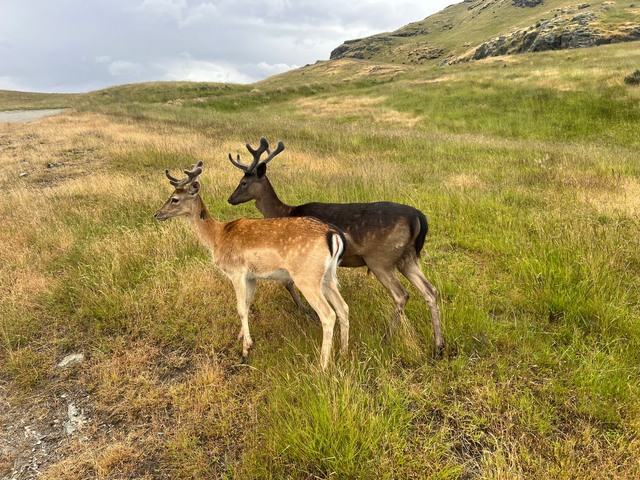
New Zealand’s battle with wild deer began accidentally, as a direct result of colonial over-enthusiasm. Red, fallow and sika deer were introduced in the late 1800s for sport.
The deer thrived in forests and high country where they had plenty to eat and no natural predators. Unsurprisingly (and also because they were initially protected), their population exploded.
By 1920, they were widely recognised as becoming a serious national environmental problem. Damage to native vegetation was severe: native understorey was stripped, seedlings browsed, forest regeneration became non-existent, and erosion occurred in sensitive catchment areas.
By the 1950s, their population was believed to exceed one million.
Depression-era hunters
During the Great Depression of the 1930s, New Zealand undertook a coordinated attempt to deal with the problem. Deer were declared a noxious pest and their protection was removed.
Under the Department of Internal Affairs, Captain George “Skipper” Yerex organised professional culling gangs. Control later passed to the NZ Forest Service and, eventually, to what is now the Department of Conservation.
Many recruits were unemployed men grateful for the work. Training was minimal.
Proof of a kill was a deer tail handed in for payment – typically a few shillings per tail on top of a basic wage. Hunters were deposited deep in bush and alpine valleys with rifles, sleeping gear and limited supplies, often including unreliable ammunition and surplus rifles left over from World War I.
They worked alone or in pairs, built rough huts, and carried meat and skins on their backs. They were left entirely on their own for months at a time, tolerating all types of weather, usually without radio contact or regular resupply – and definitely no EPIRB (emergency position indicating radio beacons) or PLB (personal locator beacons).
Within a decade, tens of thousands of deer were being shot annually, yet the overall impact was not enough. Even after 30 years of culling at this rate, there was no decisive dent in national deer numbers.
Hunters were effective in accessible areas, but in steep terrain and dense forest, deer continued to flourish.
Valuable venison
Commercial value began to emerge in the late 1930s and more clearly after World War II. Overseas demand, particularly from Europe, created a market for wild venison.
By the 1950s and early 1960s, skilled hunters could earn good money recovering carcasses. Light fixed-wing aircraft began dropping supplies into remote camps, allowing hunters to stay longer and work deeper into difficult country.
For the most capable men, deer hunting evolved into a profitable occupation.
Helicopter breakthrough
A game-changer (so to speak) came in the 1960s with the helicopter. Initially used only to transport hunters and drive deer toward shooters, helicopters were soon approved to sling-load carcasses.
Crews could now not only access previously inaccessible terrain, but also remove large numbers of deer quickly and get them to market. Dozens of helicopters operated across New Zealand.
At the peak of the wild venison boom, tens of thousands of animals were harvested annually for export. For the first time since culling began, deer numbers started to decline across large regions.
Nearly four decades after the first hunters were sent into the bush, the campaign could finally be judged a success in many areas.
Bulldogging
Alongside venison recovery, attention turned to live capture when deer farming was legalised in 1969, opening a new chapter in rural enterprise. The early capture method — using a technique known as bulldogging — was wildly dangerous.
Deer were herded onto open ground, then men jumped from the helicopter’s skids to physically wrestle the animals to the ground before binding and slinging them out — alive. Later, nets were fired or dropped to entangle them, making the task a little easier.
Injuries and deaths were common, but profits were substantial. Captured animals formed the foundation of New Zealand’s first deer farms.
Pest to industry
Through the 1970s and into the 1980s, deer farming expanded rapidly. Prices for breeding stock soared, processing infrastructure developed, and export markets for venison and velvet antler grew.
Government-led culling wound down, replaced by commercial recovery and regulated farming. Fortunes were made – and lost – when government support was later removed altogether as demand levelled out.
Today, New Zealand still has a significant wild deer population, estimated to be in the hundreds of thousands. While far lower and more controlled than mid-century peaks, feral deer remain widespread across forests and high country.
Alongside this sits a globally recognised deer farming industry supplying venison and velvet to markets around the world.
Looking back, New Zealand’s approach to deer reveals a rugged, frontier-style history – part conservation effort, part commercial opportunism – echoing the cowboys of Australia’s Northern Territory.
It is a fascinating insight into how pest control helped give rise to an entirely new rural industry. If this story interests you, you can dive deeper by listening to the podcast Deer Wars on your favourite platform.
Footnote: I sent my story to a local former recreational deer stalker, 88-year-old Wade Briscoe from Wānaka, on the South Island.
This was his comment: “Excellent summary of the situation Andrew, but unfortunately private hunters, combined with limited government efforts, are not coping with the prolific breeding activities of what some would call the over-sexed stags. In my book, that is just a natural response to the offerings presented! (Meanwhile), given the present increase in the cost of living, many families are feasting on an excellent source of untainted protein, and many men are benefiting from the extra exercise.”