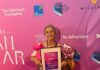
Twenty-five members attended the Annual Harvest Wrap-Up. This year, the event was held at the Owen Bowling Club and facilitated by James
Hillcoat from Pinion Advisories.
While yields varied from district to district, and it was the second drought year in a row, farmers were reasonably happy overall. Canola and barley were the winners for many; but generally poor grain prices and below-average yields meant below-average gross margins.
Growers will be paying close attention to paddock history this season as they look to maximise yields and save on inputs.
It was also suggested
that Deep N (Deep Soil Nitrogen) tests be carried out on strategic paddocks to get a better feel for soil fertility heading into seeding, after another dry year.
Up in the air with Paul Taylor
COCKIES
In this farming section, it seems appropriate to have a bird article on cockies. Of course, a cocky is a slang term for an Aussie (and New Zealand)
farmer, and cocky is short for cockatoo.
Cockatoos are familiar and conspicuous across Australia. There is more than a dozen different kinds in colours of black, white and pink.
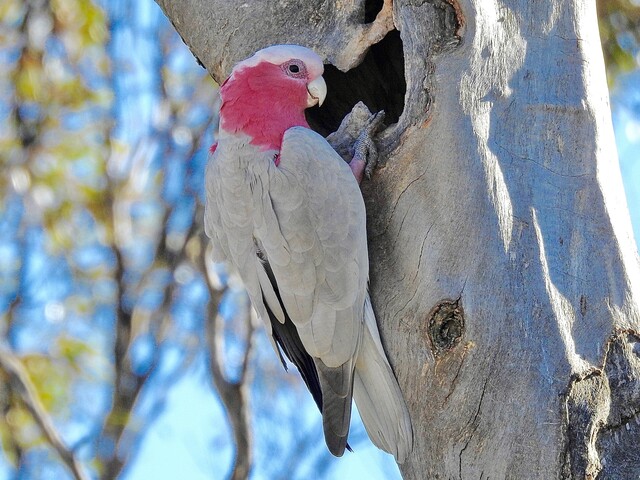
On the Adelaide Plains and in the Mid North, the two dominant species of cockatoo are the galah and little corella. They are of similar size, and smaller than the average cocky.
The word galah is derived from what some indigenous people called the bird. Early last century it was named the roseate or rose-breasted cockatoo, but now the official name is galah, a good choice.
Galahs are abundant. But it was not always the case.
In pre-European times, galahs were only found in inland Australia. In SA, they were restricted to a small area in the north east of the state.
Then, with settlement, clearing of land, agricultural crops and provision of water, galahs expanded their range to all parts of the state including urban and coastal areas.
The pink and grey plumage of galahs makes them striking birds. Being so common, their colouring is often under-appreciated.
Although a description that galahs are “among the most beautiful birds in the world” is perhaps taking it a little too far. Galahs are noisy, intelligent, and can be playful, performing aerial acrobatics and appearing comical by hanging upside down on power lines.
These antics have given rise to calling people “galahs” if they act stupidly.
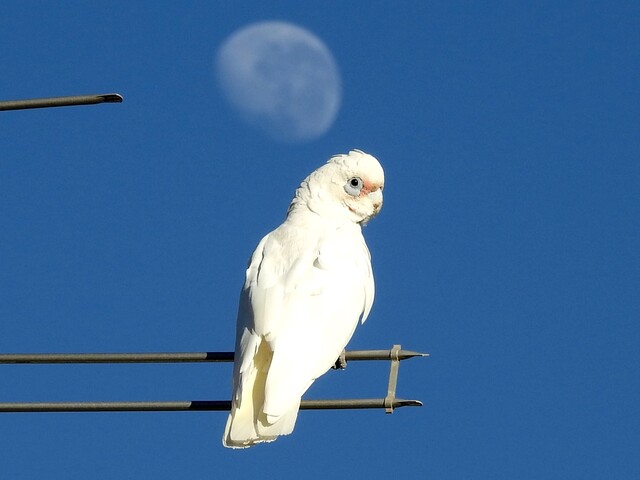
Corellas are white cockatoos, and in SA there are two species, little and long-billed. There are a few long-billed around Adelaide but most are found in the south east.
Little corellas are very common in the Flinders Ranges and have spread south and are in large numbers in some places. Corellas are often in mixed flocks with galahs.
On the downside, these two cockatoos (especially corellas), can become a problem when they are in abundance. Both can defoliate trees, damage infrastructure, make a lot of noise, and dig up turf on ovals.
Agriculturally, Galahs can be a pest by pulling up emerging crops and feeding on canola and spilt grain at harvest. Little corellas have caused a lot of hassles in places like Strathalbyn and Mount Barker.
In Balaklava, there are probably less than 100 corellas (but a lot of galahs), and the number is increasing. It remains to be seen whether they will become a significant problem.