
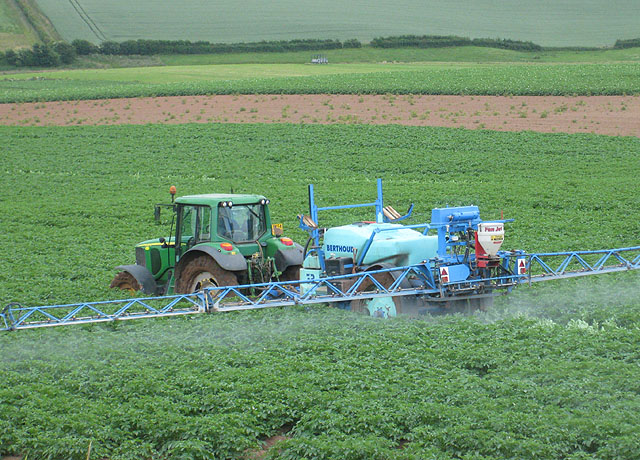
With summer weed spraying operations expected to ramp up in the coming weeks, the Department of Primary Industries and Regions (PIRSA) has called for primary producers to take extra care to prevent spray drift, particularly in unsuitable weather conditions, and to be mindful of neighbouring properties.
Following recent summer rain and increased weed growth, officers from PIRSA will undertake compliance activities to identify poor spraying practices this season.
Any deliberate or negligent use of chemicals that contravenes label instructions can attract penalties of up to $35,000 per offence.
Producers must comply with the General Duty under chemical use legislation, taking all reasonable steps to prevent or minimise harm to people and the environment from off-target chemical impacts.
They must also consider sensitive crops such as vineyards, even at a distance, and not underestimate how far spray drift can travel.
Producers were also urged to avoid spraying during hazardous inversion conditions, which generally occur from late evening through the night and into early morning.
It coincides with the launch of Grain Producers SA’s (GPSA) ‘Keep Your Droplets to Yourself’ campaign, who have advocated for adherence to best-practice spraying principles.
“Spray drift is not just an individual farm issue, when it goes wrong, it impacts neighbours, nearby communities and the reputation of agriculture more broadly,” GPSA chief executive officer Brad Perry said.
“The ‘Keep Your Droplets to Yourself’ campaign is about reminding growers of the practical steps that reduce risk and protect everyone involved.”
Mr Perry said spray drift incidents were avoidable by paying close attention to conditions and utilising available tools.
“Simple things like checking weather forecasts and data through weather stations, understanding inversion risk and selecting the right nozzle and droplet size can make a big difference,” he said.
“No one wants the added stress or cost that comes with a spray drift incident.”
PIRSA encouraged all community members and producers to report any incidents, misuse, or observed damage to the Spray Drift Hotline on 1300 799 684 or via email at pirsa.ruralchemicals@sa.gov.au, reports can be made anonymously.
PIRSA biosecurity manager of rural chemical operations Michael McManus encouraged growers to take extra care with their summer spraying programs.
“We remind producers to follow label instructions carefully and exercise diligence when spraying, especially this season as significant summer weed spraying is expected once harvest is completed,” he said.
“Off-target damage remains a growing concern, particularly in viticultural and horticultural regions, and we need the community’s cooperation to protect growers.
“PIRSA will actively monitor spray operations through audits and incident investigations, and will act on any non-compliance.”
Mr Perry said grain producers took spray drift seriously because no one wanted to see another farmer’s hard work damaged.
“This is the time of year when conditions can change quickly. With hot, still nights and inversion conditions more likely over summer, growers need to be vigilant and plan their spraying to avoid these high-risk periods,” he said.
“GPSA continues to encourage growers to use the available tools, including hazardous inversion data through the Mesonet, and to stop spray operations when conditions aren’t safe.
“A few hours of delay is always better than the long-term consequences of off-target spray drift.”
Further information and ‘Keep Your Droplets to Yourself’ campaign resources can be found online at grainproducerssa.com.au