Recently, whilst travelling through Scotland, I was fortunate to visit the Orkney Islands – an amazing piece of the country with a huge amount of history.
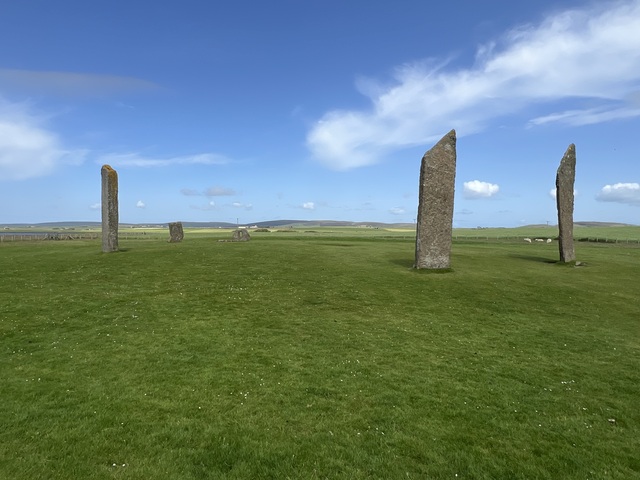
First settled by Neolithic farmers around 3700 BCE, and later shaped by the Vikings, the islands are defined as much by the ocean and wind as by the people who have worked them for thousands of years.
The Orkneys are largely agricultural. About 93,000 hectares, with about 88 per cent of the land farmed mostly for beef cattle and sheep.
Their farming methods and challenges are vastly different to ours. The climate is mild but damp (wet), not surprising when their annual rainfall is about a metre.
That is more than enough for grass to grow year-round, along with the ever-present wind off the sea.
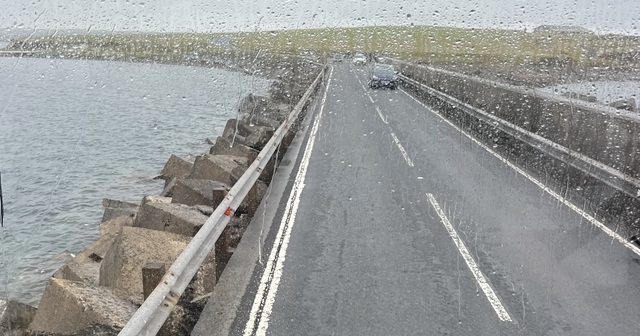
The most striking feature to me was the Churchill Barriers – four causeways linking mainland Orkney to the southern islands of Lamb Holm, Glimps Holm, Burray and South Ronaldsay.
I assumed the causeways were built for farming, but not so! In 1939, after a German U boat slipped into Scapa Flow and sank HMS Royal Oak, Winston Churchill ordered the eastern entrances to be blocked to protect the naval base.
Construction of the Churchill barriers began in 1940. Huge quantities of rock were tipped into the sea to form a base, which was then capped with massive concrete blocks to break the waves.
The work was done by 1300 Italian prisoners of war, many of whom also built the famous Italian Chapel on Lamb Holm in their spare time (the chapel was built using a Nissan Hut as its base).
The Churchill Barriers were completed in 1944 – too late to be tested in war time, but they transformed island life afterwards. Before the barriers, the southern islands relied entirely on boats for connection to mainland Orkney.
Today the A961 runs across the causeways giving farmers on those islands reliable access for moving livestock, bringing in supplies and getting produce to market.
Paddocks that once saw only local stock can now be managed with modern equipment, and additional grazing can be reached without a boat trip.
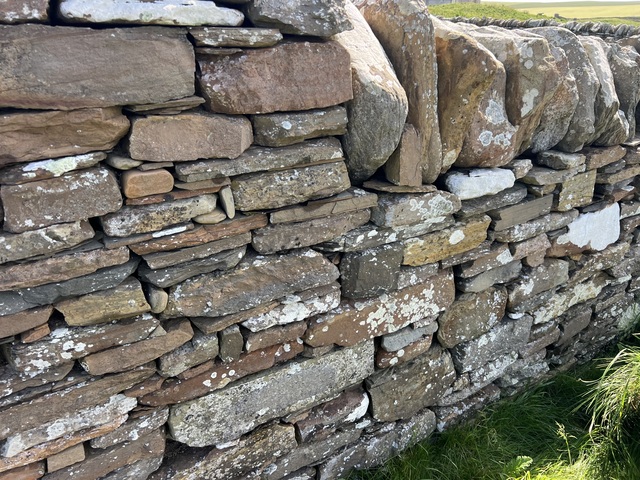
It is still an island-farming landscape, with narrow roads, old stone walls and sheds built low against the howling gales. In summer the islands have 18.5 hours of daylight, giving crops and grass a huge boost.
In mid-winter it is the opposite, with just six hours of daylight. Farming is about making the most of the long days and cool growing season, then storing enough feed for when winter closes in.
Orkney farmers are resilient dealing with the weather, the isolation and what the land will grow.
The Churchill Barriers started as a wartime defence, but for the farmers and people of the Orkneys they have become a permanent link, keeping communities connected and helping agriculture remain at the core of life in Scotland’s far north. Thanks Winston.